
E-mini S&P 500 Futures vs Micro E-mini S&P 500 Futures
Which S&P 500 Futures Contract Fits your Trading Plan?
Many traders comparing S&P 500 futures want to know whether the E-mini S&P 500 futures contract or the Micro E-mini S&P 500 futures contract is the better fit for their account size, risk tolerance and trading plan. Both contracts track the same underlying market, but they differ significantly in contract size, tick value and capital requirement.
Insignia Futures & Options works with traders who wish to trade the S&P 500 futures market. We offer CME exchange direct order routing, our proprietary InsigniaTrader professional trading platform, low day trade margins, trade recommendations, automated trading systems, managed futures programs and the support of a full service futures brokerage firm.

Have Questions?
We’re here to help – Connect with a licensed futures broker now.
E-mini and Micro E-mini Futures: The Key Differences
The E-mini S&P 500 futures contract and the Micro E-mini S&P 500 futures contract both provide access to the S&P 500 futures market, but they are designed for different levels of position size and risk exposure. Since both contracts follow the same stock index, the main difference is not market direction, but how much exposure a trader takes on with each contract.
One of the main differences between the two contracts is the contract multiplier used to determine the dollar value of each point move in the S&P 500 futures market. The E-mini carries a larger dollar value per index point, while the Micro E-mini carries a smaller value. As a result, the same market movement produces a larger gain or loss in the E-mini than in the Micro E-mini, which can affect overall trade risk.
Margin requirements also differ because the Micro E-mini is one-tenth the size of the E-mini. This typically means less capital is required to trade a Micro contract, allowing traders to adjust position size more precisely while still trading the same underlying S&P 500 futures market. Even with the smaller size, careful risk management is required.
For traders who want greater flexibility in position sizing, the Micro E-mini contract may be appealing because it represents a smaller contract value. Traders who want larger exposure with fewer contracts may prefer the E-mini. Comparing the two helps traders choose the contract that best fits their trading objectives and account funding level.

Which S&P 500 Futures Contract Best Fits your Trading Plan
E-mini S&P 500 Futures
The E-mini (Symbol: ES) is often used by traders who are comfortable with larger dollar movement per contract and who want broader exposure with fewer contracts. Because each point move has a greater dollar impact, the E-mini may be a better fit for traders with a larger account size or traders who are already comfortable managing larger price fluctuations in profit and loss.
Micro E-mini S&P 500 Futures
The Micro E-mini (Symbol: MES) is often used by traders who want smaller exposure, more flexibility in scaling positions or a lower dollar impact per contract. It may appeal to traders with smaller account sizes, traders who are newer to futures markets, traders refining their execution approach or traders who want to participate in the same market with less risk.
Why Position Sizing Matters
Choosing between the E-mini and Micro E-mini is often less about which market to trade and more about how to size a position appropriately. Two traders may have the same market opinion, but the contract they choose can create a very different trading outcome because the dollar movement per contract is greatly different.
For that reason, position sizing can be just as important as market direction. Traders often evaluate account size, stop distance, daily risk tolerance and the number of contracts they may want to scale into or out of before deciding which contract best fits their trading plan.
Keep in mind: Trading the smaller MES contract does not remove risk. It simply allows traders to participate in the same market with a smaller level of contract exposure and account size.

Frequently Asked Questions About E-mini vs Micro E-mini S&P 500 Futures
What is the difference between E-mini and Micro E-mini S&P 500 futures?
The main difference between E-mini S&P 500 futures (ES) and Micro E-mini S&P 500 futures (MES) is contract size.
The Micro E-mini contract is one-tenth the size of the E-mini, which means each price move has a smaller dollar value. Because of the smaller contract size, Micro E-mini futures allow traders to control S&P 500 futures positions with less capital and finer position sizing.
Which is better for beginners, E-mini or Micro E-mini futures?
Many newer futures traders choose Micro E-mini futures because the smaller contract size allows them to trade with less capital and reduced dollar risk per tick.
E-mini futures have larger price swings in dollar terms, which may be more suitable for traders with larger account sizes or more experience managing leverage.
Do E-mini and Micro E-mini futures move the same?
Yes. E-mini and Micro E-mini S&P 500 futures track the same underlying index and move at the same time.
The difference is not in price movement, but in how much each move is worth. A one-point move in the E-mini (ES) is worth $50 while the same move in the Micro E-mini (MES) worth $5.
How much money do you need to trade Micro E-mini futures?
Because futures trading uses leverage, traders do not need the full contract value to trade Micro E-mini futures.
The required account size depends on margin requirements, risk tolerance and trading style, but many traders use Micro E-mini contracts to start with smaller positions and gradually increase size as their experience and account balance grow.
Why do traders choose Micro E-mini futures instead of E-mini futures?
Futures traders often choose Micro E-mini futures when they want more flexibility in position sizing.
Since the contract is smaller, traders can scale into or out of trades more gradually, which may make it easier to manage risk as compared to trading the full-size E-mini futures contract.
Can you trade both E-mini and Micro E-mini futures in the same account?
Yes, futures traders can trade both E-mini (ES) and Micro E-mini (MES) S&P 500 futures.
Some traders use Micro contracts for smaller trades and E-mini contracts for larger positions, depending on their trading plan, account size and risk management approach.
Why Futures Broker Support Matters

Some futures traders prefer to trade entirely on their own, while others value being able to ask questions about margin requirements, trading platform features and contract differences before getting started.
This is one of reasons why a trader chooses to work with a full service futures brokerage firm rather than relying only on a self-directed platform.
Insignia Futures & Options combines the flexibility of self-directed trading with the availability of broker support. Traders can use our InsigniaTrader professional trading platform while also having access to assistance with account setup, order placement, trade recommendations, platform questions and general futures market information.
Why Traders Choose Insignia Futures & Options
When comparing E-mini and Micro E-mini futures, traders often look for a combination of reliable trading technology, low day trade margins and responsive brokerage support. Insignia Futures & Options works with traders who want efficient access to the futures markets along with the support of a full service futures brokerage firm.
- Serving futures traders worldwide since 2001
- Self-Directed account plans with competitive rates
- Full service futures brokerage support
- InsigniaTrader professional trading platform plus support for most 3rd party platforms
- Low day trade margins
- CME exchange direct order routing
- Trade recommendations, automated trading systems and managed futures programs
- Educational resources for futures traders
Open a Futures Trading Account
Ready to start trading futures?
Open your futures trading account today.
Our expert team is available to assist you with your account setup and to answer any questions you may have as you begin your futures trading journey.
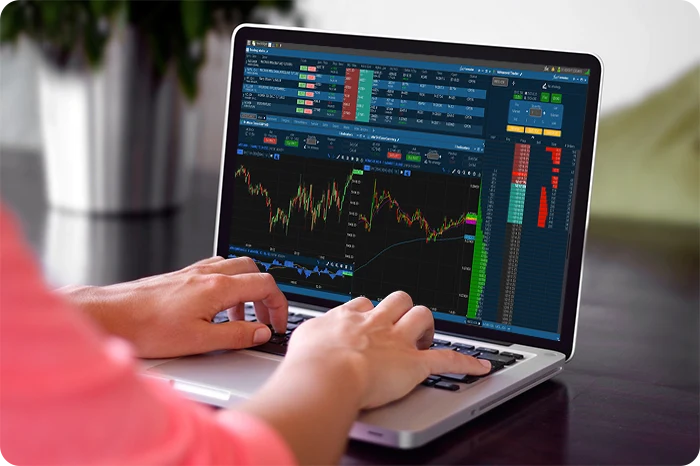


Discover Futures Trading at its Best
Discover Futures Trading at its Best
About Insignia Futures & Options
Insignia Futures & Options is a professional commodity futures and futures options brokerage firm that has served investors worldwide since 2001.
The firm focuses exclusively on futures-related markets, providing clients with direct access to major global futures exchanges and an education-first environment built around clear information, powerful trading tools and professional support.
Clients can trade futures and futures options, including spreads and options spreads, using modern trading technology and exchange-direct order execution with our proprietary InsigniaTrader platform. We also support most major trading platforms including Rithmic, TradingView, Sierra Chart and more.
Support is available from licensed and experienced futures brokers and through a 24-hour Trade Desk.
Insignia Futures & Options is registered with the U.S. Commodity Futures Trading Commission (CFTC) and is a member of the National Futures Association (NFA).
Insignia Futures & Options supports both experienced futures traders and those just beginning their futures trading journey, offering personalized support, account plans designed to match different trading needs, and access to advanced trading platforms.